
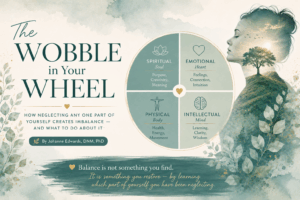
How Neglecting Any One Part of Yourself Creates Imbalance, and What to Do About It
By Johanne Edwards, DNM, PhD
Most of us are searching for the same thing, though we call it by many different names: peace, happiness, fulfillment, wholeness. We look for it in achievements, in relationships, in the next vacation or the next promotion or the next stage of life. And yet, for many people, it remains just out of reach, always ahead, never quite here.
What if the reason we cannot find it outside ourselves is simply that it does not live there? What if balance, genuine, sustainable inner harmony, is not something we acquire but something we restore, by understanding our own nature and attending to it with the same care we give everything else?
The model I return to most often in my work is elegantly simple. We are not one-dimensional beings. We are four. And when one dimension goes neglected for too long, the whole of us suffers.
Balance is not something you find. It is something you restore, by learning which part of yourself you have been neglecting.
The Four Arenas of a Whole Life
Imagine your life as a wheel, divided into four equal segments: the physical, the emotional, the intellectual, and the spiritual. When all four are tended to with roughly equal care, the wheel rolls smoothly. When one segment swells with over-investment, or collapses from neglect, the wheel wobbles. Progress slows. The ride becomes exhausting.
Most of us already sense which quadrant is out of shape. We know when we have been ignoring our bodies, or avoiding our feelings, or letting our minds go underestimated, or losing touch with whatever gives our life meaning. The question is not whether we know, it is whether we are willing to do something about it.
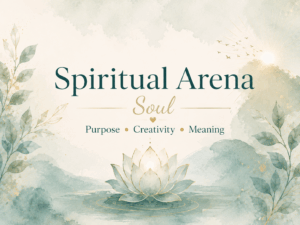
The Spiritual Arena — Soul
The spiritual dimension of life has nothing necessarily to do with organized religion, though for many people it is expressed through faith. More broadly, it is the arena where creativity and imagination live, where our sense of purpose resides, and where we connect with whatever gives our life meaning beyond mere survival.
It is also the most commonly sacrificed quadrant. We set aside our dreams in favor of security. We trade the work we were born to do for the work that pays reliably. We tell ourselves that we will pursue our passion later, after the mortgage is paid, after the children are grown, after retirement, not noticing that “later” has a way of never arriving.
Listen for the language of spiritual neglect. It sounds like: “Only two more years until I graduate.” “Just three more days until the weekend.” “Thirty years in and then I’m out.” When we spend our lives counting down to the next escape, we are not living — we are enduring.
When we disconnect from our spiritual core, we create what can only be described as a hole in the soul. And because human beings cannot tolerate emptiness, we find ways to fill it, sometimes with work, sometimes with distraction, sometimes with substances that dull the ache. The answer is never the filler. The answer is re-connection with what we actually care about.
Ask yourself: When did you last do something purely because it lit you up, not because it was productive, practical, or expected? What would it mean to make that a regular part of your life rather than an occasional indulgence?
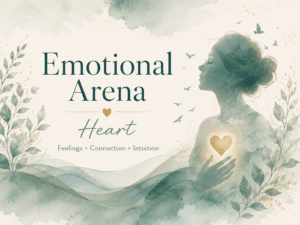
The Emotional Arena — Heart
The emotional arena is where love and intimacy grow. It is the home of our gut feelings, our intuition, our capacity for connection, and our deepest relational patterns. It is also where our most difficult emotions live: fear, grief, anger, loneliness, shame.
We tend to treat these emotions as problems to be solved, or better yet, avoided. We override them with busyness. We medicate them with food, alcohol, screens, or constant stimulation. We tell ourselves that we should not feel this way, and in doing so we add a layer of shame on top of the original pain.
The truth is simpler and more compassionate than that: all of our feelings are appropriate. They arise for reasons. They carry information. The goal is not to eliminate them but to develop the capacity to recognize, understand, and manage them.
Research consistently shows that only three out of ten people with high IQ go on to create genuinely successful lives. Seven out of ten people with high emotional intelligence do. Emotional intelligence, the ability to recognize, understand, and manage our own emotions and those of others, is among the strongest predictors of leadership effectiveness, relationship quality, and long-term well-being.
Misery is a choice. Which means joy is also a choice. The question is whether we are willing to do the work that choosing it requires.
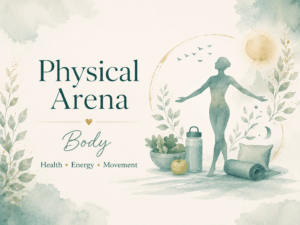
The Physical Arena — Body
The physical arena is the most visible and, in many ways, the most neglected. We know what our bodies need. We know we need sleep, movement, nourishment, and rest. We simply tend to de-prioritize all of it until the body forces the conversation.
And it will. The body is patient, but it keeps score. Chronic stress measurably suppresses immune function. Depression and anxiety are documented risk factors for cardiovascular disease. The mind and body are not separate systems running in parallel, they are one integrated system, and what affects one affects the other.
Genuine physical health requires attending to all four arenas, because an emotionally depleted, spiritually disconnected, intellectually stagnant person will struggle to be physically well, regardless of how diligently they exercise or how carefully they eat.
Worth noting: Chronic stress is now recognized as a contributing factor in the majority of primary care visits. The body is not malfunctioning when it sends these signals, it is communicating. The question is whether we are willing to listen.
The Intellectual Arena — Mind
The intellectual arena, the domain of lifelong learning, curiosity, and mental growth is the one most people assume is well-tended simply because they are busy. But being busy is not the same as being stimulated. Consumption is not the same as growth.
We live in an era of extraordinary change. What we know today will, in many fields, be substantially revised or obsolete within two to four years. But this can also be understood as an ongoing invitation to remain curious, to keep learning, to refuse the comfort of assuming that what we already know is sufficient.
The people who will thrive in the years ahead are not necessarily the ones who know the most right now. They are the ones who have cultivated the capacity to learn, who approach new information with openness rather than defensiveness, and who find intellectual challenge energizing rather than threatening.
Restoring the Balance
Balance across the four arenas does not require perfection. It requires honest awareness of where you have been neglecting yourself, and the willingness to give that neglected part of you some genuine attention.
Begin with the arena that feels most depleted. Not the one that feels most urgent, or the one that others tell you to prioritize, the one that you know, in the quietest part of yourself, has been waiting the longest.
From there, a few questions are worth sitting with:
Are my dreams being lived, not someday, but now? Am I caring for my body with the same attention I would give to someone I love? Am I allowing myself to feel what I actually feel, without numbing or judging my own emotional experience? Am I growing intellectually, reading, learning, exposing myself to ideas that challenge and expand how I think?
You deserve more than survival. You deserve a life that is actively, deliberately yours, built around who you actually are, not just around what is expected of you.
“There is enough time for me to be me.” Say it. Mean it. Then begin building the life that proves it.
A Simple Balance Check
Rate yourself honestly from 1 to 10 in each arena, not how you think you should score, but where you genuinely are today:
Soul: Am I doing work that means something to me? Do I have a sense of purpose and passion in my daily life?
Heart: Am I in genuine, nourishing relationships? Do I allow myself to feel, and do I manage my emotions with skill and compassion?
Body: Am I sleeping, moving, and eating in ways that support my energy and long-term health?
Mind: Am I continuing to learn and grow? Am I being challenged intellectually in ways that feel alive rather than merely stressful?
Wherever your lowest score sits, that is your starting point. Not a judgment. An invitation.
— Johanne Edwards, DNM, PhD